Hoolicards
New expanded second edition, introducing 20 new cards, featuring firms not previously included.
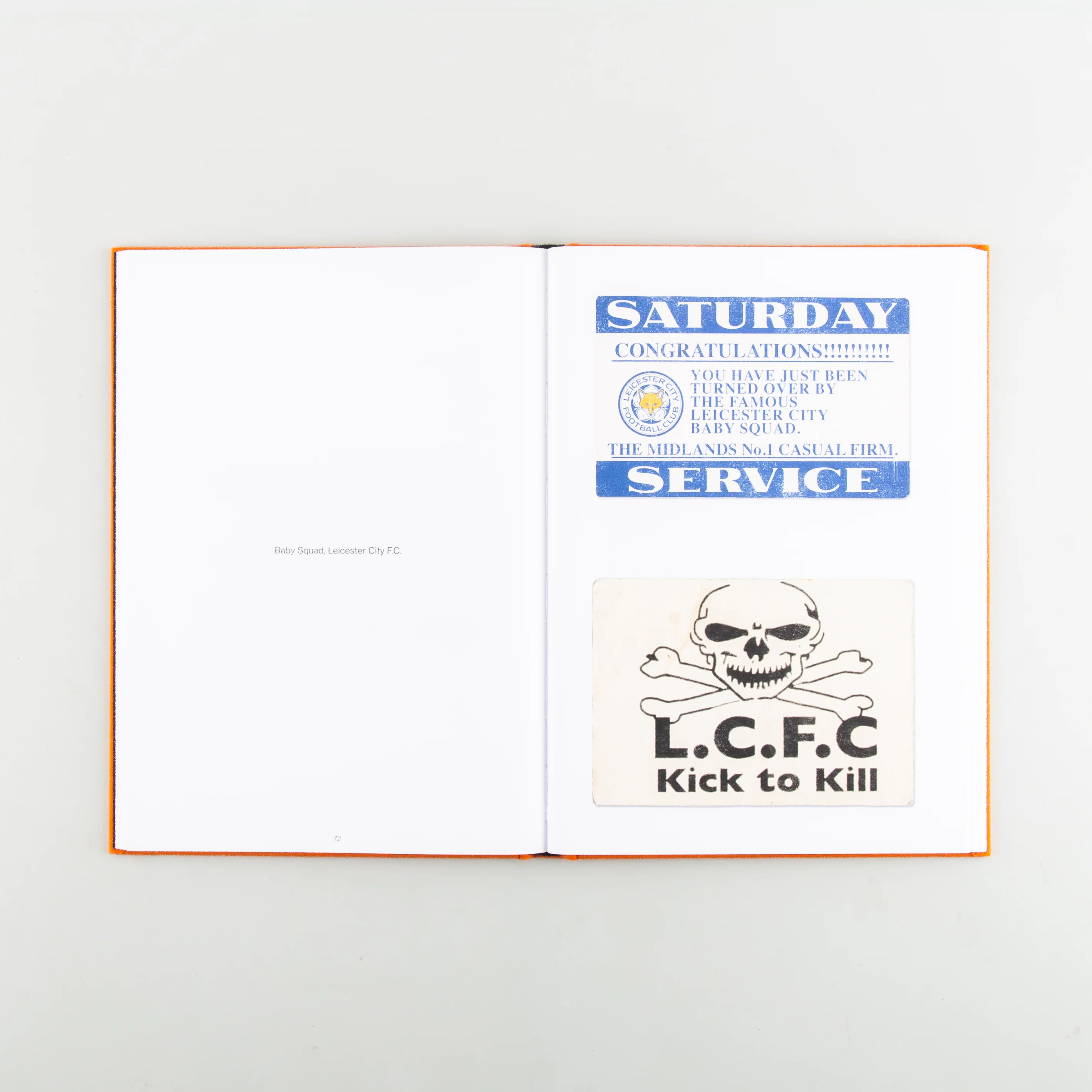
A football calling card archive featuring over 40 infamous 80-90’s UK hooligan/casual firms.
There are many myths about what we now call ‘casual culture’ one of the most often repeated is that by adopting items of bourgeois sports such as golf, tennis, skiing, and sailing – football hooligans were trying to ‘disguise’ themselves as ‘boys next door’ or even attempting to signal some admiration for the upwardly mobile professionals that inhabited these arenas.
The first ‘calling cards’ carried by hooligan firms were a satirical response to the corporate names adopted by many crews. They weren’t simply ‘mindless yobs’ but ‘firms’ like solicitors or gangsters. The ‘firm’ had its own rituals and protocols, especially in London. The Inter-City Firm was an extension of the East End ‘firms’ of professional criminals.
The business card also chimed with crews moving away from the traditional terrace ends and into the more gentrified seats. Usually, these were in the areas closest to rival fans but in the days before all-seater stadia, paying more to sit away from the core support at the ‘end’ was a strange phenomenon.
Of course, there was nothing funny about being violently attacked by these firms and left bleeding on the ground with a card telling you that you’ve just been assaulted by the Stockport Stock Exchange Pension Fund (SSEPF).
This book is an insight into a relatively short-lived but interesting moment in hooligan history.
Essay ‘‘Youth/Youth/Youth’’ by Jamie Holman
Forewords by Phil Thornton (Author of Casuals: Football, Fighting & Fashion: The Story of a Terrace Cult) & Tony Harrison(Former Leicester City F.C. ‘‘Baby Squad’’ hooligan)
Original: $87.20
-70%$87.20
$26.16




Description
New expanded second edition, introducing 20 new cards, featuring firms not previously included.
A football calling card archive featuring over 40 infamous 80-90’s UK hooligan/casual firms.
There are many myths about what we now call ‘casual culture’ one of the most often repeated is that by adopting items of bourgeois sports such as golf, tennis, skiing, and sailing – football hooligans were trying to ‘disguise’ themselves as ‘boys next door’ or even attempting to signal some admiration for the upwardly mobile professionals that inhabited these arenas.
The first ‘calling cards’ carried by hooligan firms were a satirical response to the corporate names adopted by many crews. They weren’t simply ‘mindless yobs’ but ‘firms’ like solicitors or gangsters. The ‘firm’ had its own rituals and protocols, especially in London. The Inter-City Firm was an extension of the East End ‘firms’ of professional criminals.
The business card also chimed with crews moving away from the traditional terrace ends and into the more gentrified seats. Usually, these were in the areas closest to rival fans but in the days before all-seater stadia, paying more to sit away from the core support at the ‘end’ was a strange phenomenon.
Of course, there was nothing funny about being violently attacked by these firms and left bleeding on the ground with a card telling you that you’ve just been assaulted by the Stockport Stock Exchange Pension Fund (SSEPF).
This book is an insight into a relatively short-lived but interesting moment in hooligan history.
Essay ‘‘Youth/Youth/Youth’’ by Jamie Holman
Forewords by Phil Thornton (Author of Casuals: Football, Fighting & Fashion: The Story of a Terrace Cult) & Tony Harrison(Former Leicester City F.C. ‘‘Baby Squad’’ hooligan)